
Seasonal Colour Analysis — All 12 Sub-Seasons
Bright Spring, Cool Summer, Deep Autumn, True Winter — and the eight other sub-seasons. A plain-English guide from a certified Perth consultant.
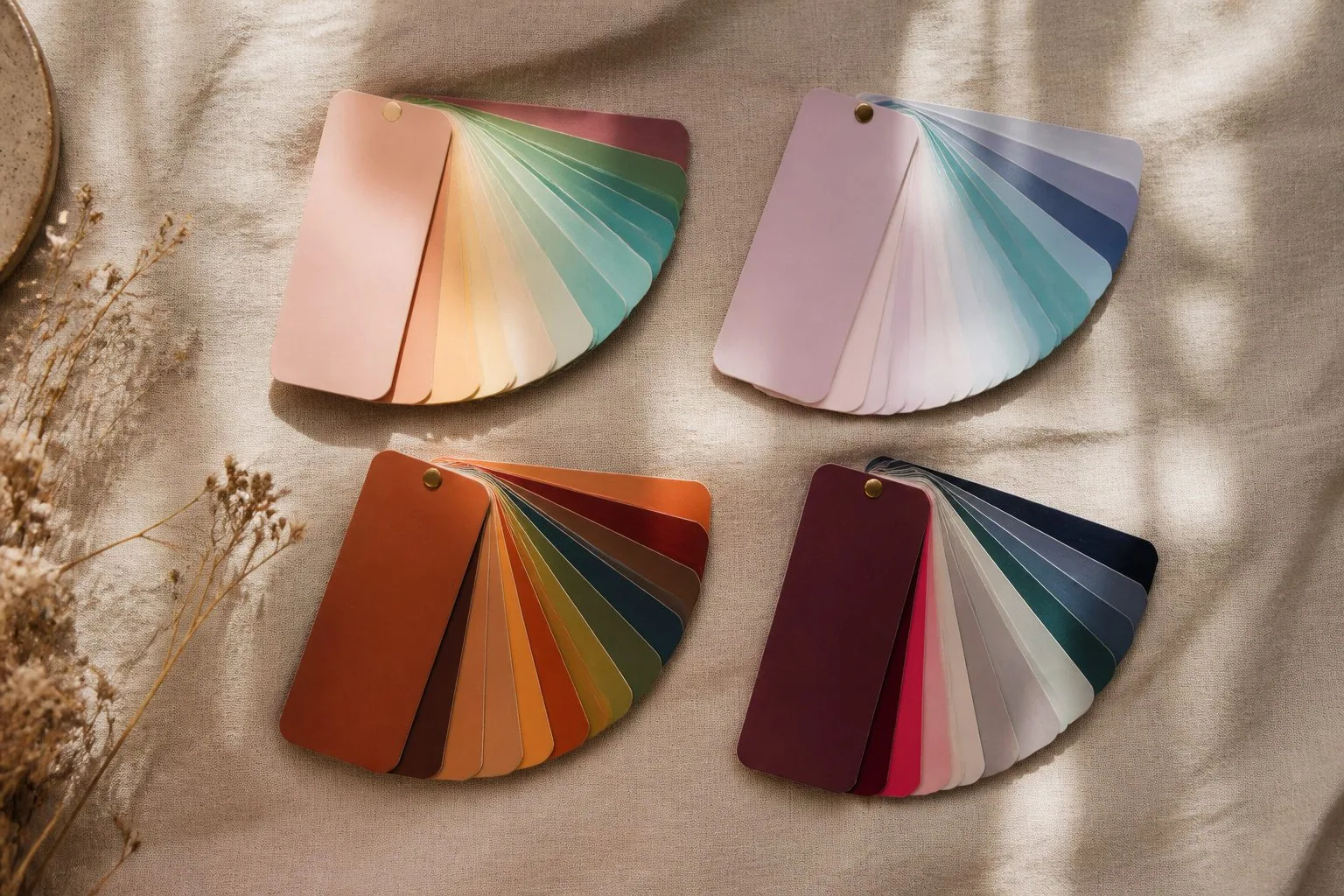
Forget the four seasons you learned in the '80s. Modern colour analysis works in 12 — and getting your sub-season right is the difference between 'autumn-ish' and a wardrobe that finally clicks.
Why four seasons aren't enough anymore
The original Carole Jackson system divided everyone into Spring, Summer, Autumn or Winter. But two 'Autumns' can look completely different — one warm and earthy, one muted and soft. The 12-season expansion fixes that by adding a sub-dimension to each.
The Spring family
- Bright Spring — clear, warm, high contrast. Coral, turquoise, true red.
- True Spring — warm and fresh. Peach, golden yellow, leafy green.
- Light Spring — soft and warm. Buttercream, blush, light aqua.
The Summer family
- Light Summer — cool and gentle. Powder blue, lavender, dove grey.
- True Summer — cool and soft. Raspberry, denim, rose brown.
- Soft Summer — muted and cool. Sage, mauve, smoky teal.
The Autumn family
- Soft Autumn — muted and warm. Olive, terracotta, mushroom.
- True Autumn — warm and rich. Pumpkin, mustard, forest.
- Deep Autumn — dark and warm. Burgundy, chocolate, deep teal.
The Winter family
- Deep Winter — dark and cool. Black, true white, ruby.
- True Winter — cool and bright. Sapphire, magenta, icy pink.
- Bright Winter — clear and cool. Cobalt, hot pink, lemon.
How to find your sub-season
There's no reliable shortcut — even seasoned stylists need draping. A Colours by Sue session walks through all the colours until you find your perfect, most flattering colours then gives you samples of your best colours to make shopping easier.
Frequently asked questions
Is the 12-season system the same as 16-season?
Some schools split further into 16 (adding a 'true' or 'tonal' axis), but 12 is the international standard and covers virtually every client we see in Perth.
Can two seasons share colours?
Yes — soft Autumn and Soft Summer overlap on muted neutrals, for example. The sub-season tells you which way the shared colour should lean.
How to read a sub-season name
Each sub-season name encodes two pieces of information: the dominant quality and the parent season. 'Bright Winter' means a Winter palette pushed toward maximum brightness. 'Soft Autumn' means an Autumn palette pulled toward muted, softened versions. Once you know the convention, you can almost picture the palette before seeing it.
Real-world examples of each sub-season
- Bright Spring — think coral lipstick, warm turquoise top, true red sandals. High energy, warm, clear.
- True Spring — peachy golds, leafy greens, ivory rather than white. Sun-warmed and fresh.
- Light Spring — pastels with a touch of warmth: buttercream, blush, light aqua.
- Light Summer — cool pastels: powder blue, lavender, dove grey, soft rose.
- True Summer — denim, raspberry, rose-brown, soft white. Cool and elegant.
- Soft Summer — sage, mauve, smoky teal. The 'quiet luxury' palette.
- Soft Autumn — olive, terracotta, mushroom, warm taupe. Earthy and gentle.
- True Autumn — pumpkin, mustard, forest, rust. Rich and warm.
- Deep Autumn — burgundy, chocolate, deep teal, espresso. Dramatic and warm.
- Deep Winter — black, true white, ruby, sapphire. High contrast and cool-leaning.
- True Winter — sapphire, magenta, emerald, icy pink. Cool and crisp.
- Bright Winter — cobalt, hot pink, lemon, pure white. Maximum clarity.
The two factors that determine your sub-season
Your sub-season is decided by which dimension dominates your colouring:
1. Temperature dominance (warm vs cool) — driven mainly by undertone. 2. Chroma dominance (bright vs soft) — driven by the clarity of your eyes and the contrast between your features.
A consultant identifies your dominant first, then your secondary, to land on the right sub-season. Trying to skip straight to a sub-season is what causes most online quizzes to misclassify.
Why sub-seasons matter for Perth shopping
Perth boutiques rotate stock fast and seasonal trends can flood the racks in colours that suit only two or three sub-seasons. Knowing yours means you can walk into Garden City, Karrinyup or Claremont Quarter and dismiss most of the floor in seconds.
What a Perth session delivers
A Colours by Sue session confirms your perfect colours through draping, gives you samples of your perfect colours and walks you through how to combine your shades with your existing wardrobe. See pricing → or book →.
Combining your sub-season with your existing wardrobe
You don't need to throw out your wardrobe after a colour analysis. Most Perth clients find about 40-60% of their current pieces already sit inside or close to their palette — they just hadn't realised which ones were doing the heavy lifting. A typical post-session edit looks like:
- Keep — anything in your palette, especially close to the face.
- Repurpose — items in 'wrong' colours can move to layering pieces worn under a flattering top, or to lower-body items (trousers, skirts) where colour matters less.
- Replace gradually — your worst-offender 'drains the face' tops become the first to swap out as you naturally refresh the wardrobe.
There's no rush. Even a slow 12-month edit transforms the wardrobe.
How sub-seasons interact with grey hair
Going grey doesn't change your sub-season, but it does shift your overall contrast level. A Deep Autumn who goes silver-grey usually finds the deepest, richest shades feel a bit heavy near the face — the palette stays the same, but you'll lean toward the softer end of it. A consultant accounts for this during draping, so a session in your 50s or 60s remains as accurate as one in your 30s.
Why getting the sub-season right matters for shopping
A season-level result ('you're an Autumn') is too broad to shop confidently from. A sub-season ('Soft Autumn') gives you a tight 60+ shade palette that tells you exactly which mustards, olives and rusts to buy and which to avoid. Walk into any Perth retailer with those colour samples in hand and the racks visibly shrink to the items that will actually work. Compare session options →.
How sub-seasons translate into outfit formulas
Knowing your sub-season gives you a small set of repeatable outfit formulas that always work:
- Best neutral + best accent + best metal — your safest day-to-day combo.
- Two neutrals + one accent — your polished work formula.
- One bold palette colour + one quiet palette colour — your dinner or event formula.
- Tonal layering within one palette family — your effortless winter formula.
Once you stop guessing the colours, building outfits becomes a five-minute exercise rather than a daily decision-tax.
Ready to discover your palette?
Book your personal colour analysis or makeup session with Sue in Currambine or across the Perth metro area.