
Personal Colour Analysis Explained
What personal colour analysis is, how the 12-season system works, and how to know if it's right for you. From a certified Perth consultant.
Personal colour analysis isn't a beauty trend — it's a decades-old system used by stylists, makeup artists and image consultants worldwide. Here's exactly how it works and why it matters.
The origins of personal colour analysis
The seasonal system most people know today was popularised in 1980 by Carole Jackson's book Color Me Beautiful, but the theory dates back to Bauhaus colour studies of the 1920s. The premise: every person has natural undertones in their skin, eyes and hair that harmonise with a specific range of colours.
Wear shades inside that range and your skin looks smoother, your eyes brighter, your features more defined. Wear shades outside it and your face fades into the fabric — emphasising shadows, redness and fine lines.
How the 12-season system works
Modern analysis uses three dimensions: hue (warm vs cool), value (light vs dark) and chroma (bright vs muted/soft). Combining these gives 12 sub-seasons such as True Spring, Soft Autumn, Bright Winter or Cool Summer.
Knowing your sub-season is the difference between 'autumn earth tones' (vague) and a specific palette of 30 shades you can shop from confidently.
Signs you might benefit
- You own clothes you 'love but never wear'
- Strangers say you look tired even when you're not
- You can't tell if gold or silver jewellery suits you
- Foundation always looks slightly off
- Your wardrobe is a museum of impulse buys in random colours
What happens in a session
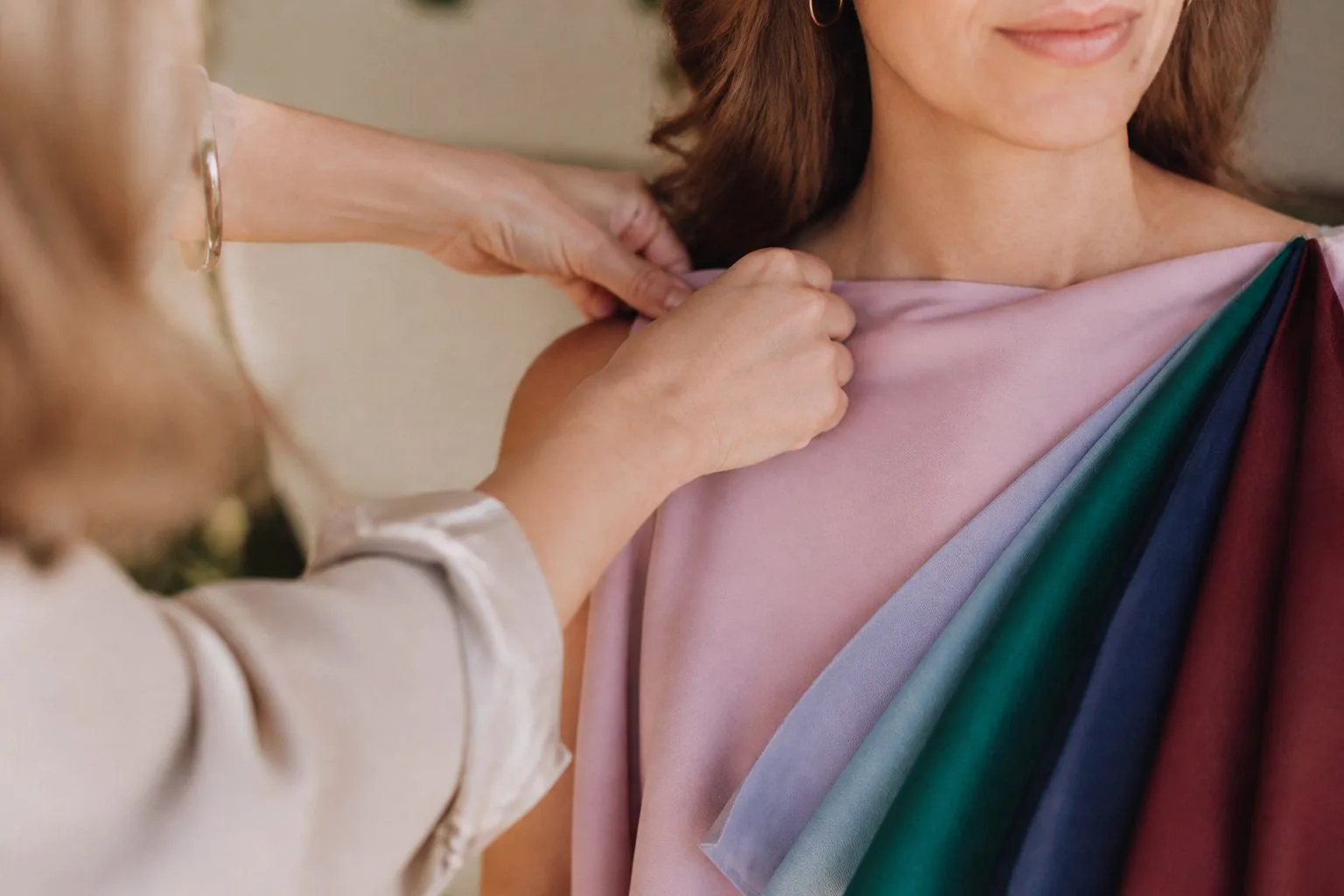
A trained consultant drapes fabric swatches across your décolletage in daylight, watching for shifts in your skin clarity. We test cool against warm, light against deep, bright against muted — narrowing down until we find your most flattering colours.
You leave with fabric colour samples of your best shades, personalised makeup colour guidance from a qualified makeup artist, and a full shopping framework. Book your Colours by Sue session →
Frequently asked questions
Is personal colour analysis worth the money?
If you spend $1000+ a year on clothes, yes — most clients say it pays for itself within months by eliminating unflattering buys.
Can my colour season change?
No. Your underlying undertones are genetic and stable. Hair colour changes don't change your season — they're just one part of your overall colouring.
The science behind why colour analysis works
Skin reflects light. The pigments and undertones in your skin selectively absorb some wavelengths and bounce others back. When the colour you're wearing harmonises with the wavelengths your skin already reflects, the eye reads your face as the focal point — clearer, brighter, more defined. When it doesn't, the fabric becomes the focal point and your features recede.
That's why a poorly chosen colour 'ages' you: the eye is drawn to under-eye shadows, redness around the nose, and any unevenness in skin tone, instead of to your eyes, mouth and bone structure.
What a 12-season system looks like in practice
Each of the 12 sub-seasons has a tightly defined palette of 30 to 50 shades. For example:
- A True Autumn palette leans into pumpkin, mustard, olive, terracotta, ivory and chocolate — all warm, all rich, all muted enough to harmonise with golden skin and warm hair.
- A Cool Summer palette runs through rose, raspberry, slate blue, soft white and gentle plum — cool, soft, never harsh.
- A Bright Winter palette includes true red, cobalt, hot pink, icy lemon and pure black — clear, cool and high-contrast.
The point isn't that you'll only ever wear those colours. It's that those are the shades that need no thought — they'll always work. Anything outside the palette becomes a deliberate styling choice rather than a guess.
Common myths worth dismantling
- 'I'm a Winter because I have dark hair.' Hair colour is one input of many. Plenty of dark-haired women are actually Soft or Deep Autumns.
- 'My colours never change.' Your underlying season is stable, but your palette can soften within that season as you age. If you have more red in your skin or more grey in your hair, it's worth getting your analysis redone.
- 'I can't wear black.' Only Winters wear true black brilliantly. Other seasons have richer alternatives — chocolate for Autumns, navy for Summers, espresso for Springs.
- 'Colour analysis is restrictive.' A 50-colour palette is genuinely more variety than most people wear in a year.
How a Perth consultation builds on theory
In the Currambine studio, we move through the system in a clear sequence: hue, value, chroma, sub-season. You see each step. Nothing is hand-waved or 'I just feel you're a Spring' — the result is built drape by drape so you can trust it. You leave with fabric colour samples of your best shades, personalised makeup colour guidance from a qualified makeup artist, and notes you'll actually use. Compare session options →
How a session typically unfolds:
A standard 75-minute Perth session breaks down roughly like this:
- 10 mins — introduction
- 45 mins — colour draping including advice on best neutrals, metals, day and evening colours as well as your best colour combinations.
- 15 mins — walking you through your most flattering day and evening makeup shades.
- 5 min — choose your most flattering colour samples to take home.
You leave knowing not just your perfect colours but how to wear them on Monday morning.
Who benefits most from personal colour analysis
Across hundreds of Perth sessions, the clients who get the biggest jump in confidence are:
- Women between major life stages — new job, post-baby return, retirement, divorce, downsizing.
- Anyone going grey naturally and noticing previous colours no longer 'land'.
- Professionals on camera regularly (Zoom calls, presentations, video content).
- Brides and mothers of the bride coordinating multiple looks.
- Anyone who has tried online quizzes and ended up more confused than before.
Why DIY is harder than it looks
You're trying to objectively analyse the one face you've spent your whole life looking at. That familiarity makes it almost impossible to see subtle shifts in clarity — the very thing colour analysis measures. A trained outside eye, in controlled light, picks up shifts you genuinely cannot see in your own bathroom mirror. That's the entire value of a professional Perth session.
Ready to discover your palette?
Book your personal colour analysis or makeup session with Sue in Currambine or across the Perth metro area.